How Hair Restoration Treatments Can Help with Thinning Hair
Posted on 5/18/2026 by The Facial Center |
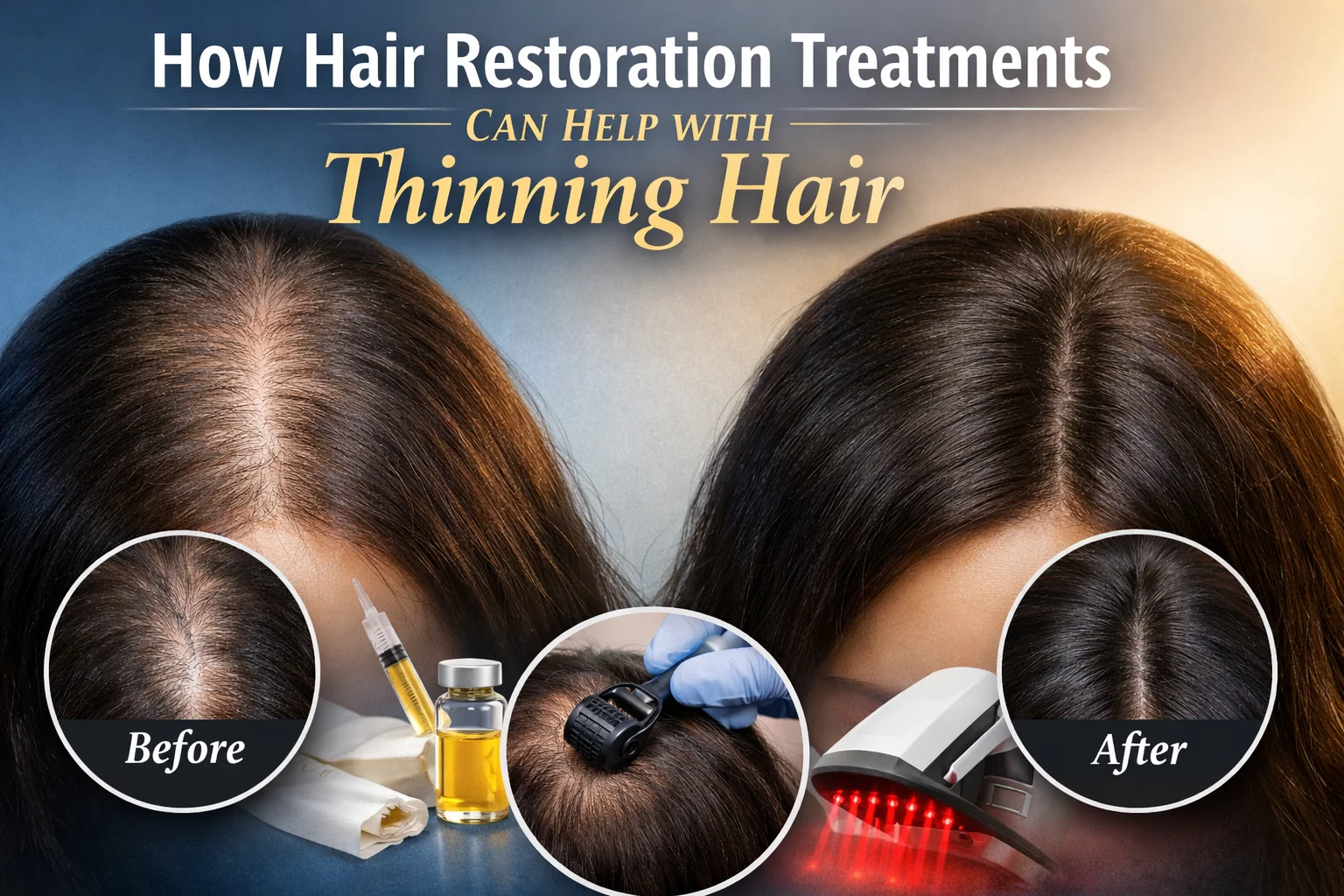 Thinning hair is more common than most people think, and it affects both men and women at various stages of life. Whether you’ve noticed a wider part line, less volume in your ponytail, or more hair in the shower drain than usual, you’re not alone. At The Facial Center in Charleston and Teays Valley, WV, our team offers hair restoration treatments designed to address thinning hair and help patients feel confident about their appearance again. Thinning hair is more common than most people think, and it affects both men and women at various stages of life. Whether you’ve noticed a wider part line, less volume in your ponytail, or more hair in the shower drain than usual, you’re not alone. At The Facial Center in Charleston and Teays Valley, WV, our team offers hair restoration treatments designed to address thinning hair and help patients feel confident about their appearance again.
This guide explains why hair thinning happens, what treatment options are available, and how to know when it’s time to talk to a provider about your hair loss concerns.
On This Page
Why Hair Thinning Happens
Hair thinning can be caused by a wide range of factors, and understanding the root cause is an important first step toward finding the right solution. One of the most common causes is genetics. Androgenetic alopecia, often called pattern hair loss, affects millions of adults and tends to run in families. In men, it typically shows up as a receding hairline or thinning crown. In women, it usually appears as a gradual reduction in overall volume, especially along the part line.
Hormonal shifts are another major contributor. Changes related to menopause, thyroid imbalances, or life events like pregnancy can trigger a type of hair shedding called telogen effluvium.
Other common triggers include chronic stress, nutritional deficiencies (particularly iron, biotin, and vitamin D), certain medications, and underlying medical conditions. In many cases, thinning hair results from a combination of factors rather than a single cause.
Types of Hair Restoration Treatments
Hair restoration has come a long way, and today’s treatments go well beyond the one-size-fits-all approach. The right option depends on the cause and severity of your hair loss, as well as your individual goals.
PRP (Platelet-Rich Plasma) Therapy
PRP therapy uses a concentrated portion of your own blood, rich in growth factors, to stimulate hair follicles and encourage regrowth. A small blood sample is drawn, processed to isolate the platelet-rich plasma, and then injected into the scalp at targeted areas. Many patients begin to see improvement after a series of sessions, with results continuing to develop over several months.
Low-Level Laser Therapy
This non-invasive approach uses specific wavelengths of light to energize hair follicles at the cellular level. It can help slow the progression of thinning and support healthier hair growth over time. Low-level laser therapy is often used alongside other treatments for a more comprehensive approach.
Topical and Nutritional Support
In some cases, addressing the issue from the inside out makes a meaningful difference. Your provider may recommend targeted supplements, topical solutions, or adjustments to your routine that support the hair growth cycle. These options can be especially effective when thinning is related to nutritional gaps or stress.
Your provider will evaluate your hair and scalp during a consultation and recommend a treatment plan tailored to your specific situation.
What to Expect from Treatment
Hair restoration is a gradual process. Unlike cosmetic treatments that produce visible changes immediately, hair regrowth takes time because the hair growth cycle itself operates on a timeline of months, not days.
Most patients begin to notice early signs of improvement within two to three months of starting treatment. Fuller, more noticeable results typically develop over six months to a year, depending on the type of treatment and how your body responds. Consistency matters; following your treatment schedule and any at-home recommendations from your provider will give you the best chance of seeing meaningful progress.
It’s also worth knowing that some degree of ongoing maintenance is often part of the plan. Periodic follow-up sessions or continued use of supportive products can help preserve the results you’ve achieved. Your provider will outline a realistic timeline during your initial consultation so you know what to expect from the start.
When to Seek Help for Thinning Hair
One of the most common things we hear from patients is that they wish they’d come in sooner. Hair restoration tends to be more effective when treatment begins early, before significant follicle damage has occurred.
If you’re noticing more shedding than usual, visible thinning at the part or temples, a decrease in hair density, or patches of hair loss that weren’t there before, it’s worth scheduling a conversation with a provider. Even if the thinning turns out to be temporary, an evaluation can help rule out underlying causes and give you a clear path forward.
There’s no minimum level of hair loss required to seek help. If the change is bothering you, that’s reason enough to explore your options.
Take the First Step
Thinning hair doesn’t have to be something you just accept. The Facial Center in Charleston and Teays Valley, WV offers personalized hair restoration plans designed around your unique situation and goals. Contact our team or call 304-205-6123 to schedule a consultation and learn what’s possible for your hair. Visit our homepage to explore our full menu of services.
Frequently Asked Questions
Can hair restoration work for women?
Yes. Hair thinning is extremely common in women, and many of today’s restoration treatments are well-suited for female patients. Your provider will evaluate the cause of your thinning and recommend an approach that fits your specific needs.
How long does it take to see results from hair restoration?
Most patients begin noticing early improvements within two to three months, with fuller results developing over six months to a year. Hair grows in cycles, so patience and consistency with your treatment plan are important.
Is hair restoration painful?
Most hair restoration treatments involve minimal discomfort. PRP therapy involves small injections into the scalp, and numbing can be applied beforehand. Low-level laser therapy is completely non-invasive and painless.
What causes hair thinning in your 30s or 40s?
Genetics, hormonal changes, stress, and nutritional deficiencies are among the most common causes. In women, thinning in the 30s and 40s is frequently linked to hormonal shifts related to pregnancy, perimenopause, or thyroid function.
Do I need ongoing treatments to maintain results?
In many cases, periodic maintenance sessions help sustain your results over time. Your provider will work with you to create a long-term plan that balances effectiveness with convenience.
|
|