Microneedling: How It Works and What It Can Do for Your Skin
Posted on 6/3/2026 by The Facial Center |
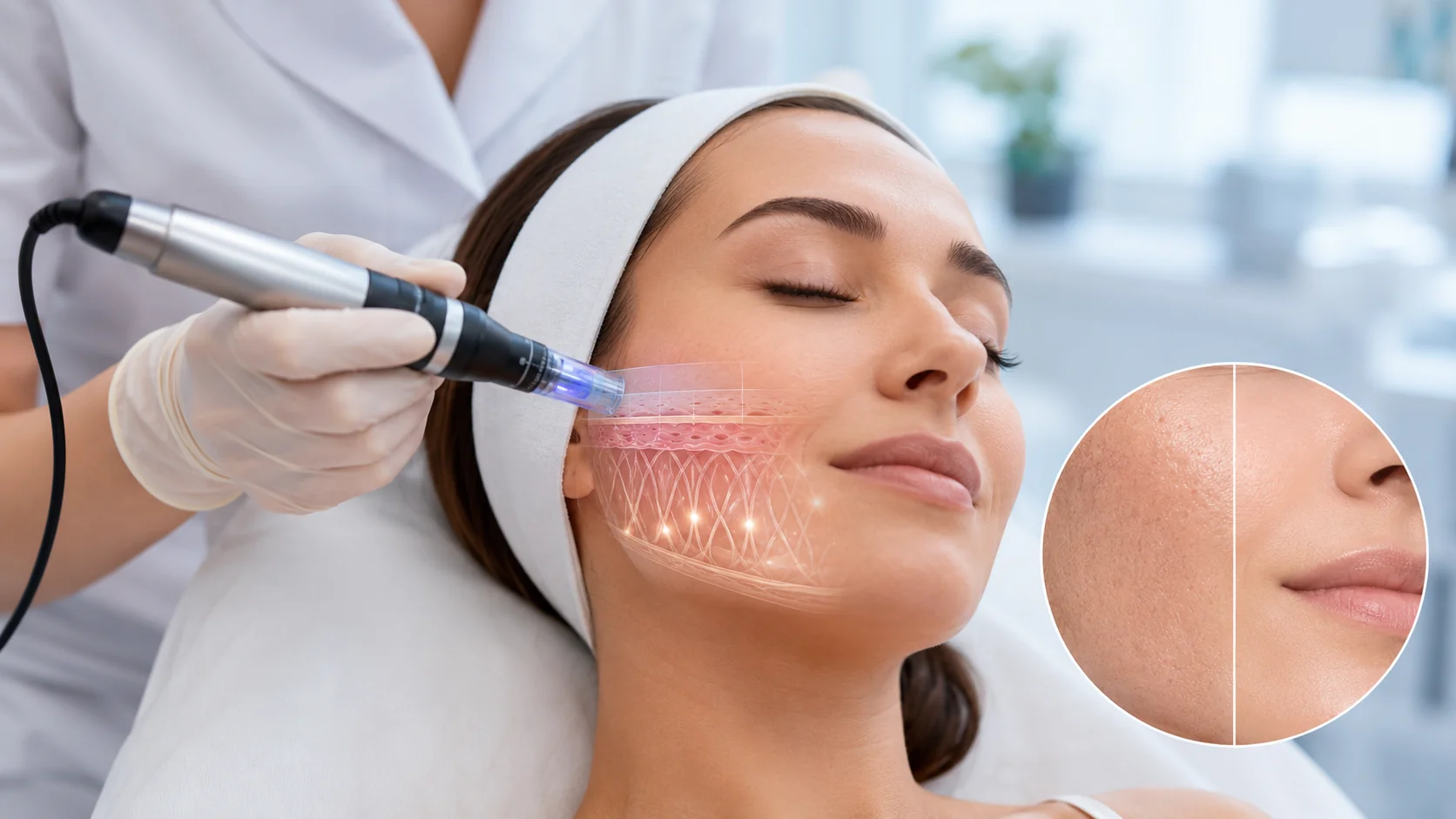 Microneedling is a minimally invasive skin rejuvenation treatment that uses fine, precisely controlled needles to create micro-channels in the skin, prompting your body to produce new collagen and elastin so fine lines soften, scars fade, pores tighten, and tone evens out. If you have been researching skin treatments in Charleston, WV, microneedling has probably come up more than once, and for good reason. Few single treatments address as wide a range of concerns with as little recovery time. Microneedling is a minimally invasive skin rejuvenation treatment that uses fine, precisely controlled needles to create micro-channels in the skin, prompting your body to produce new collagen and elastin so fine lines soften, scars fade, pores tighten, and tone evens out. If you have been researching skin treatments in Charleston, WV, microneedling has probably come up more than once, and for good reason. Few single treatments address as wide a range of concerns with as little recovery time.
At The Facial Center, microneedling is one of the most popular services we offer because it works with your body rather than against it. Instead of stripping or resurfacing the skin, it nudges your own healing system to rebuild stronger, smoother tissue from within. This guide walks through how the treatment actually works, what it can realistically improve, what to expect during your appointment, and how to decide whether it’s a good fit for your goals.
On This Page
What Is Microneedling?
Microneedling, sometimes called collagen induction therapy, is a procedure that uses a handheld device fitted with very fine, sterile needles to create thousands of tiny, controlled punctures in the upper layers of the skin. These punctures are too small to cause visible injury, but they are significant enough to trigger your body’s natural wound healing response.
When your skin senses these microscopic disruptions, it releases growth factors and begins producing fresh collagen and elastin. Collagen is the protein that keeps skin firm and resilient; elastin gives it bounce and flexibility. Both decline naturally with age, sun exposure, and lifestyle factors. By prompting your skin to make more of them, microneedling helps reverse some of the visible signs of that decline over time.
What makes the treatment so adaptable is that needle depth can be adjusted. A shallow setting works well for general texture, dullness, and surface concerns. A deeper setting is used for thicker areas of the skin or for issues like acne scars and stretch marks. Your provider chooses the depth based on the area being treated and the result you want.
How the Microneedling Process Works
A typical microneedling session at our Charleston office takes roughly an hour from start to finish, though the actual needling portion is shorter. Most of the appointment is spent on preparation, comfort, and post-treatment care.
Here is what a session generally looks like:
| • |
Cleanse and assess - Your provider removes any makeup, oils, and skincare products and evaluates the treatment areas
|
| • |
Numbing - A topical numbing cream is applied and left on for about 20 to 30 minutes so the procedure stays comfortable
|
| • |
Treatment - The microneedling device is passed methodically over the skin in sections, with the needle depth adjusted for each area
|
| • |
Soothing serum or growth factor - A nourishing serum is often applied immediately afterward, when the micro-channels are still open and able to absorb it more effectively
|
| • |
Cool down and aftercare instructions - Your provider applies a calming product and reviews what to do and avoid for the next several days |
Most people describe the sensation as a mild prickling or vibration, more odd than uncomfortable. The numbing cream does most of the heavy lifting. Some pinpoint redness or minor pinprick bleeding can occur in deeper areas, both of which are normal and resolve quickly.
What Microneedling Can Improve
Microneedling is one of the few treatments that addresses surface-level and deeper structural concerns at the same time. Patients at our Charleston and Teays Valley offices most often come in to address a handful of common issues:
| • |
Fine lines and wrinkles - Especially around the eyes, mouth, and forehead, by rebuilding the collagen scaffolding beneath the skin
|
| • |
Acne scars - Particularly the indented, rolling, or boxcar types that do not respond well to topical products
|
| • |
Stretch marks - On the abdomen, thighs, or arms, where collagen remodeling can soften their appearance over time
|
| • |
Hyperpigmentation and uneven tone - Including sun spots and lingering marks left behind by old breakouts
|
| • |
Enlarged pores - By tightening surrounding tissue and refining overall texture
|
| • |
Dull or rough texture - For skin that simply looks tired or has lost its former glow |
For younger patients dealing with the aftermath of breakouts, microneedling is often part of an acne scar revision plan for teens and young adults. For older patients, it is frequently paired with other treatments to maximize results without anything more aggressive on the menu.
What to Expect Before, During, and After
Knowing the rhythm of a treatment ahead of time makes the experience easier and helps you get the best result. Here is what each phase looks like.
Before Your Appointment
In the week leading up to treatment, avoid retinoids, strong exfoliating acids, waxing, and significant sun exposure on the area being treated. Come to your appointment with clean skin and no makeup if possible. If you have a history of cold sores and you are treating around the mouth, let us know in advance so a preventive medication can be discussed.
During the Session
You will be reclined comfortably while the numbing cream takes effect. Once the area is fully numb, the device is passed methodically across the skin. Most patients say the cheeks and forehead are easier to tolerate than the bonier areas around the temples or jawline, but none of it is what most people would call uncomfortable when the numbing is working properly.
After Your Session
Expect your skin to look pink or flushed for the first 24 to 48 hours, similar to a mild sunburn. Some patients see light dryness or flaking around day three or four as the surface layer turns over. Avoid heavy makeup, sweating, and direct sun for at least 24 hours, and skip active ingredients like retinol and glycolic acid for about a week. A gentle cleanser, a bland moisturizer, and a mineral sunscreen are your best friends during this window.
Visible improvement usually starts to appear two to four weeks after a session, with continued change over the following months as new collagen forms. Most treatment plans involve a series of three to six sessions spaced four to six weeks apart, depending on the concern being addressed.
Is Microneedling Right for You?
Microneedling works well for most skin types and tones, which is one of its biggest advantages over treatments like certain lasers that can be limiting for darker complexions. That said, it is not for everyone. We typically recommend waiting if you are pregnant or nursing, currently dealing with an active breakout in the treatment area, prone to keloid scarring, or recently treated with isotretinoin within the past six months.
If your primary concern is moderate to severe acne scarring, deeper wrinkles, or noticeable skin laxity, you may benefit more from radiofrequency microneedling, which combines the same micro-channel technique with controlled heat energy to reach deeper layers and tighten the tissue more dramatically. During your consultation, our team evaluates your skin, your goals, and your medical history to recommend the option that fits best. Sometimes that is standard microneedling on its own; other times it is a combination with peels, growth factor serums, or a different treatment altogether.
For patients curious about combining microneedling with regular skincare maintenance, our spa services menu includes complementary facials and peels that pair well between microneedling sessions.
Schedule Your Microneedling Consultation in Charleston, WV
If microneedling sounds like a fit for your skin goals, the next step is a consultation with our team. We will talk through your concerns, walk you through what realistic results look like for your skin, and build a plan that makes sense for you. Call 304-205-6123 or visit our Charleston, WV cosmetic skincare home page to get started, or learn more about microneedling at our Teays Valley location if that office is closer to you.
Frequently Asked Questions
How many microneedling sessions will I need to see results?
Most patients see noticeable improvement after a series of three to six sessions spaced four to six weeks apart. The exact number depends on what is being treated: fine lines and dullness often respond faster than deep acne scars or stretch marks. Maintenance sessions every few months help preserve results long term.
Is there any downtime after microneedling?
Recovery is brief compared to more aggressive treatments. Expect 24 to 48 hours of pink, slightly sensitive skin similar to a mild sunburn, with some patients seeing light flaking on day three or four. Most people return to work the next day, with instructions to avoid heavy makeup, sweating, and direct sun for the first 24 hours.
How is microneedling different from radiofrequency microneedling?
Standard microneedling uses needles alone to create micro-channels that stimulate collagen. Radiofrequency microneedling adds controlled heat energy delivered through the needles, which reaches deeper tissue and produces more skin tightening. Both target similar concerns, but radiofrequency is generally a better fit for moderate to severe laxity or deeper scars.
Is microneedling safe for darker skin tones?
Yes, and that is one of microneedling’s biggest advantages. Because the treatment does not rely on light or heat energy that targets pigment, it is considered safe across the full range of skin tones. Some lasers and chemical peels carry a higher risk of pigmentation changes in darker complexions; microneedling does not.
Can microneedling be combined with other treatments?
It can, and often is. Microneedling pairs well with growth factor serums applied immediately after the session, and many patients incorporate it into a broader plan that includes facials, peels, or injectables scheduled separately. Members of The Facial Club often build microneedling into their routines to keep results consistent year-round.
When will I start to see results from microneedling?
Initial brightness and texture improvements often appear within the first week or two. More significant changes, particularly with scarring and fine lines, become noticeable around four to six weeks after each session as new collagen continues to form. Full results from a complete series are typically visible three to six months after the final treatment.
|
|