Medical Weight Loss Programs: What Makes a Provider-Supervised Approach Different
Posted on 6/17/2026 by The Facial Center |
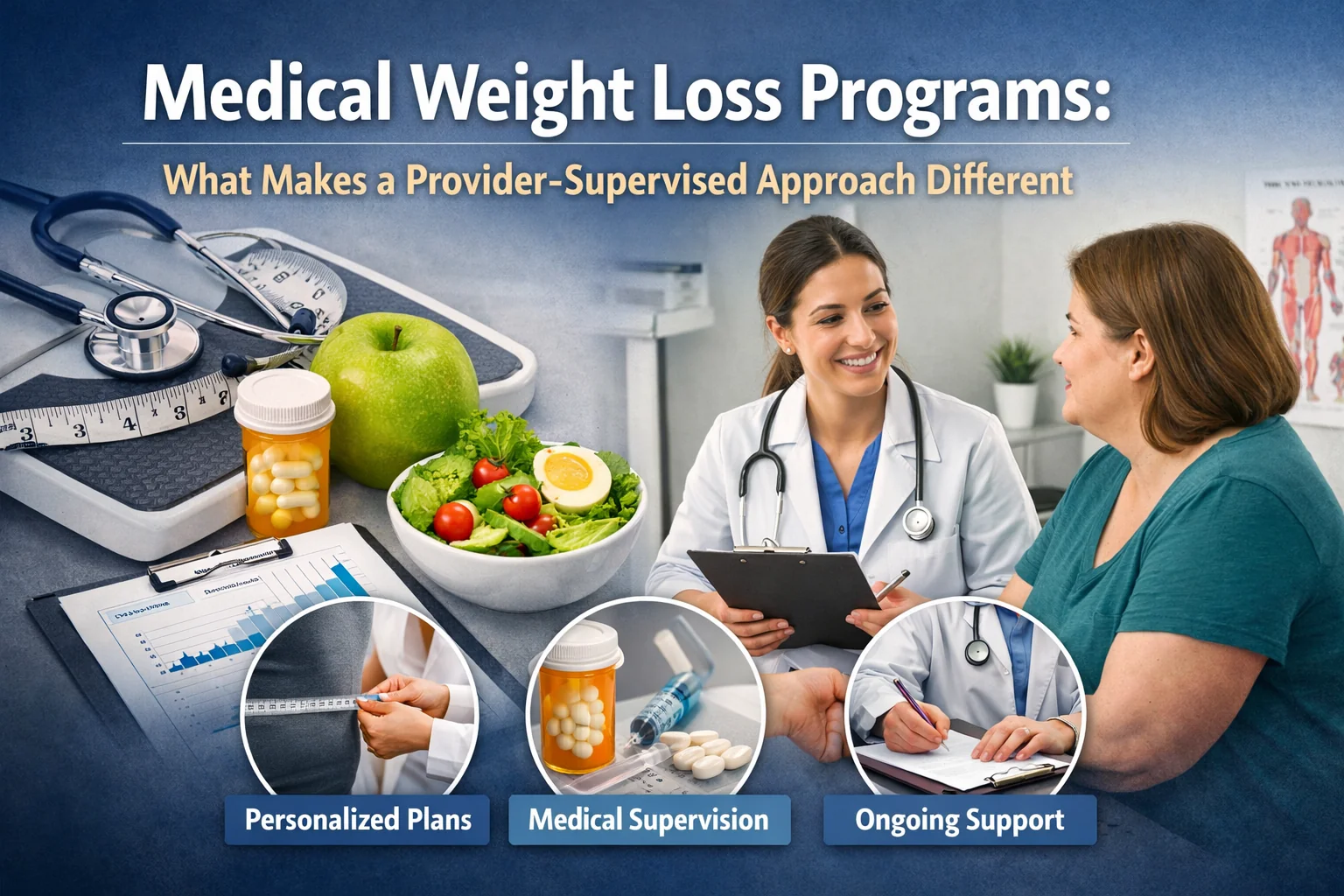 Losing weight on your own can feel like an uphill battle, especially when fad diets and generic plans don’t account for what’s actually going on inside your body. A medical weight loss program takes a fundamentally different approach by combining professional oversight, lab-based insights, and a personalized plan built around your unique health profile. At The Facial Center in Charleston and Teays Valley, WV, our weight loss program is designed to give patients the structure and support they need to achieve sustainable results. Losing weight on your own can feel like an uphill battle, especially when fad diets and generic plans don’t account for what’s actually going on inside your body. A medical weight loss program takes a fundamentally different approach by combining professional oversight, lab-based insights, and a personalized plan built around your unique health profile. At The Facial Center in Charleston and Teays Valley, WV, our weight loss program is designed to give patients the structure and support they need to achieve sustainable results.
This guide covers what a provider-supervised weight loss program involves, how it differs from dieting on your own, and who tends to benefit most from this approach.
On This Page
What Is a Medical Weight Loss Program?
A medical weight loss program is a structured plan developed and monitored by a healthcare provider. Unlike commercial diet plans or apps that offer generalized advice, a medical program starts with an in-depth evaluation of your health, including lab work, body composition analysis, medical history, and lifestyle factors. The plan that follows is tailored specifically to you.
Depending on your needs, a medical weight loss program may include nutritional guidance based on your lab results and dietary preferences, regular check-ins with your provider to track progress and adjust the plan, and support for related concerns like hormonal imbalances, energy levels, or sleep quality.
The goal isn’t just to help you lose weight quickly. It’s to help you lose weight in a way that’s healthy, sustainable, and aligned with your overall wellbeing.
How It Differs from Dieting on Your Own
Most people have tried at least one diet before considering a medical program. Some have tried many. The frustration of losing weight only to gain it back is one of the most common reasons patients seek professional help.
The core difference comes down to accountability and precision. When you diet on your own, you’re working with limited information. You might not know whether a hormonal imbalance is slowing your metabolism, whether a nutrient deficiency is affecting your energy, or whether the caloric target you’re following is actually right for your body. A provider-supervised program fills those gaps with data.
There's also the clinical component. Ongoing provider oversight means your plan is reviewed and adjusted as your body responds, rather than left to guesswork. Self-directed dieting simply can't replicate that level of support.
Another distinction is the way a medical program addresses the full picture. Weight doesn’t exist in a vacuum. Hormones, stress, sleep, and even gut health all play a role. Our team can evaluate these factors and, when appropriate, coordinate with services like hormone replacement therapy to address underlying issues that may be making weight management harder than it needs to be.
What a Typical Program Looks Like
Every patient’s experience is different, but most medical weight loss programs at our office follow a general structure.
The process begins with an initial consultation and evaluation. Your provider will review your medical history, discuss your goals, and order any necessary lab work. This information forms the foundation of your custom plan.
From there, you’ll receive a treatment plan that may include a combination of nutritional strategies, physical activity recommendations, prescription medication (if appropriate), and scheduled follow-ups. These check-ins aren’t just weigh-ins; they’re opportunities to review your progress, troubleshoot obstacles, and make adjustments based on how your body is responding.
Many patients find that the regular accountability is one of the most valuable parts of the program. Having someone in your corner who understands your goals, tracks your data, and adjusts the approach as needed creates a level of support that’s difficult to replicate on your own.
As you progress, your provider may also discuss complementary services. For example, patients who achieve significant weight loss sometimes explore skin rejuvenation after weight loss to address changes in skin elasticity or tone.
Who Is a Good Candidate for Medical Weight Loss?
Medical weight loss programs are designed for adults who want a guided, evidence-based approach to managing their weight. You don’t need to meet a specific BMI threshold to benefit. If you’ve been struggling with weight despite consistent effort, feel stuck in a cycle of dieting and regaining, or suspect that an underlying factor like hormones or metabolism is making progress harder, a medical program could be a strong fit.
This approach is also well-suited for patients with weight-related health concerns such as elevated blood pressure, insulin resistance, or joint discomfort. Working with a provider ensures that your weight loss plan accounts for these factors and supports your overall health, not just a number on the scale.
If you’re unsure whether a medical program is right for you, the initial consultation is a great starting point. It’s an opportunity to ask questions, share your history, and find out what a customized plan could look like.
Start Your Weight Loss Journey
A provider-supervised approach can give you the clarity, structure, and medical insight that DIY dieting can’t. If you’re ready to take a different approach to weight loss, The Facial Center in Charleston and Teays Valley, WV is here to help. Contact our team or call 304-205-6123 to schedule your consultation. Visit our homepage to explore everything we offer.
Frequently Asked Questions
Do I need a referral to start a medical weight loss program?
No referral is needed. You can schedule a consultation directly with our team to discuss your goals and find out if the program is a good fit for you.
Will I be prescribed weight loss medication?
That depends on your evaluation. Prescription medications are one possible component of a medical weight loss program, but they’re not automatically included. Your provider will determine whether medication is appropriate based on your health profile and goals.
How often will I need to come in for appointments?
Appointment frequency varies by program and individual needs. Many patients start with visits every two to four weeks and adjust the schedule as they progress. Regular check-ins are an important part of staying on track.
Can hormonal issues affect my ability to lose weight?
Yes. Hormonal imbalances related to thyroid function, cortisol, estrogen, testosterone, or insulin can all make weight management more difficult. Our team can evaluate these factors and may recommend hormone replacement therapy or other interventions to address them alongside your weight loss plan.
Is a medical weight loss program safe?
Yes. Because the program is supervised by a provider who monitors your health throughout the process, it’s designed to be both effective and safe. Any medications or interventions are chosen based on your individual health profile and adjusted as needed.
|
|